
Palabras clave
neurogenic pain
neuropathic-pain treatment
platelet-rich plasma
Resumen
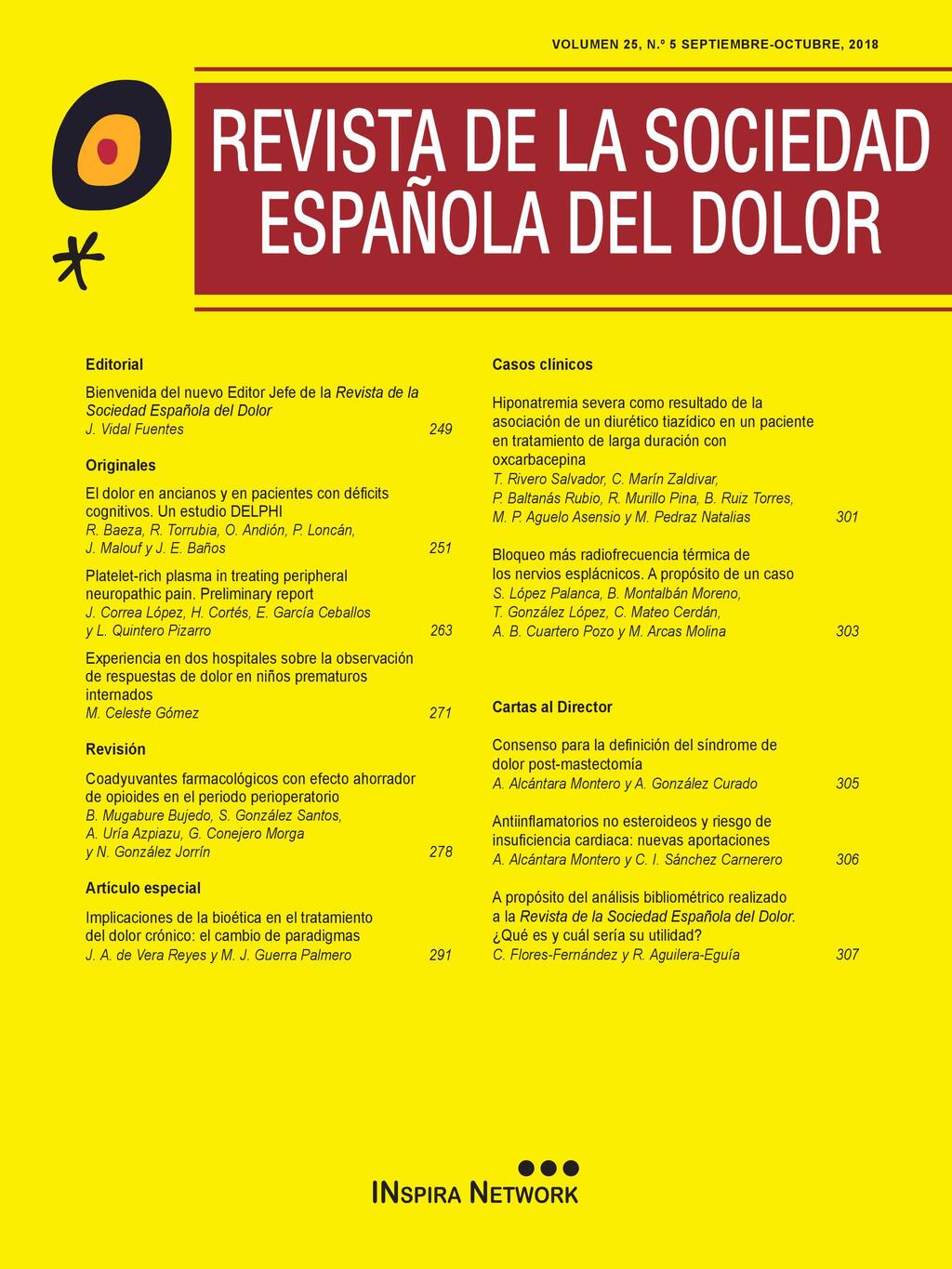
Background: Neuropathic pain (NP) is a chronic form of progressively incapacitating pain with a high impact on patients’ quality of life. Often underdiagnosed and undertreated, NP has currently no effective treatment schemes, despite the many drugs and many techniques that have been proposed. This paper examines the effects of platelet-rich plasma (PRP) on relieving such form of pain applying it to the site where NP originates. Method: 45 patients with shooting, burning, electric, or lancinating pain and allodynia, with refractory multimodal-approach to pharmacologic management for more than 3 months were included in the study. All patients had a diagnosis of peripheral neuropathic pain. Patients received a sonographic-guided injection of PRP at the affected dermatome site. Results: At the end of three-month follow-up, the pain score was reduced up to 70 % in 39 out of the 45 patients, permitting the lowering of pain medication and improving their quality of life. Conclusion: These positive and promising results with PRP in treating peripheral neuropathic pain in the present study encourage us for further clinical investigations of this novel proposal.Licencia.
Los artículos publicados en RESED (Revista de la Sociedad Española del Dolor) se distribuyen bajo una licencia Creative Commons Reconocimiento-NoComercial-SinObraDerivada 4.0 Internacional (CC BY-NC-ND 4.0).
Esta licencia permite copiar y redistribuir el material en cualquier medio o formato, siempre que se cite adecuadamente la autoría y la fuente original. No se permite el uso comercial de la obra ni la distribución de obras derivadas.
Derechos de autoría.
Los derechos de explotación de los trabajos publicados corresponden a la Sociedad Española del Dolor. Las personas autoras conservan sus derechos morales sobre la obra y el derecho a difundirla conforme a los términos de la licencia.
Autoarchivo.
Se permite a las personas autoras depositar la versión publicada de su artículo en repositorios institucionales o temáticos y en su página web personal, citando la publicación original en RESED
Acceso abierto.
RESED es una revista de acceso abierto: todos sus contenidos son de libre acceso, sin coste para las personas lectoras ni para las autoras.